

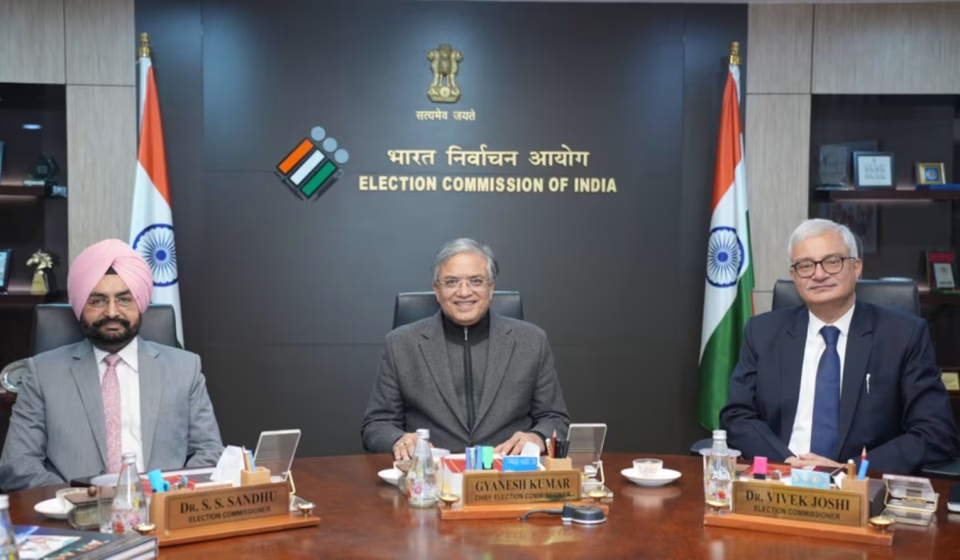

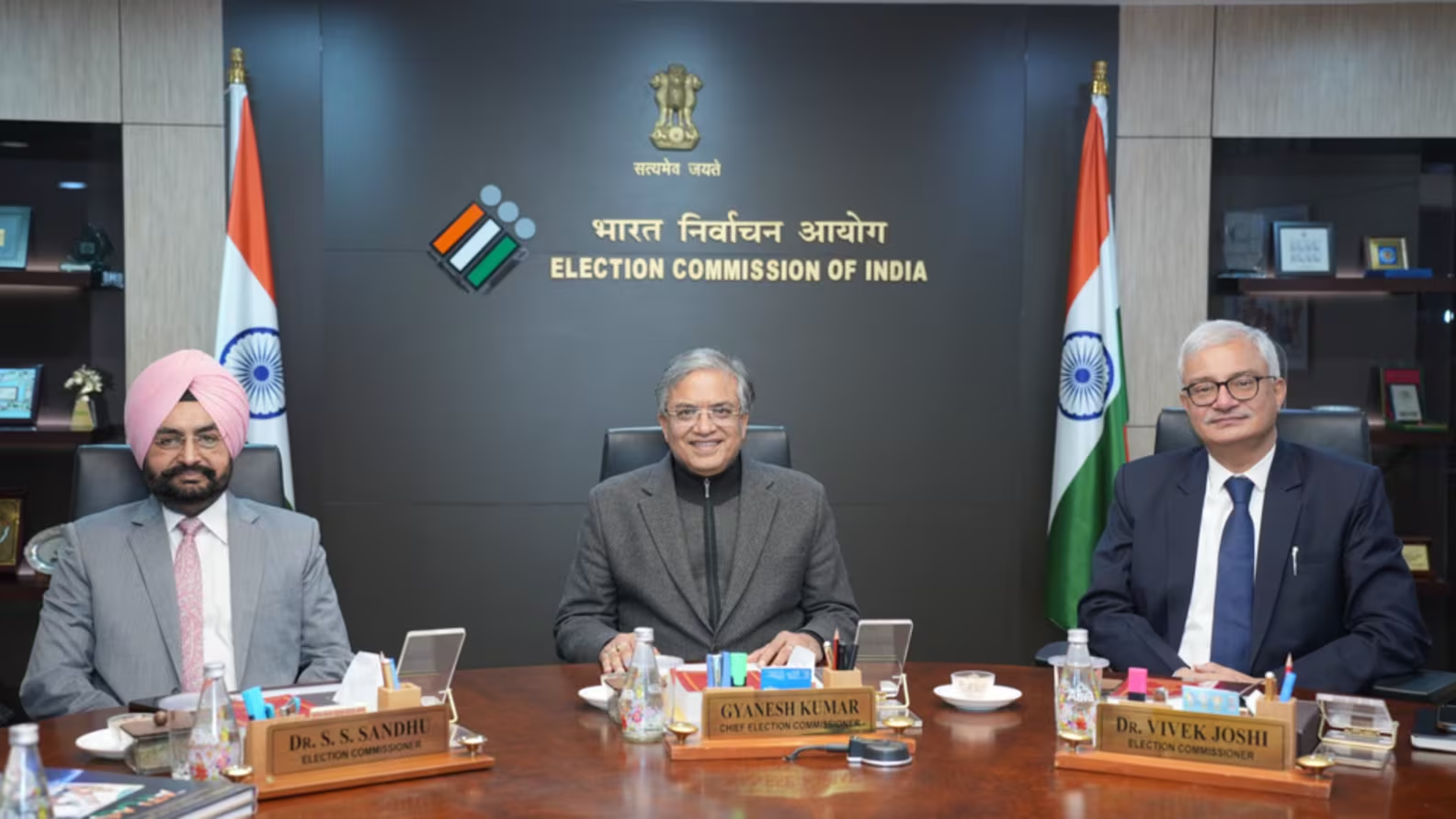
Election Commissioners RTI Letter: Major Revelation Amid SIR Controversy
New Delhi, October 21: The Election Commissioners RTI Letter has emerged as a significant development amid the ongoing controversy surrounding the Special Intensive Revision (SIR) of electoral rolls in India. Information obtained through a Right to Information (RTI) application has revealed that two Election Commissioners, Sukhbir Singh Sandhu and Vivek Joshi, wrote a letter to the Cabinet Secretary on July 29. However, the contents of the letter have not been disclosed in the RTI response, raising questions about the nature of the concerns communicated by the two officials.
The disclosure has attracted attention because the letter reportedly concerned issues related to the allocation of work responsibilities within the Election Commission of India (ECI). The development comes at a time when the SIR exercise and reports of disagreements among Election Commission officials have become subjects of public and political debate.
Election Commissioners RTI Letter: What the Disclosure Reveals
According to the information provided in response to the RTI application, Election Commissioners Sukhbir Singh Sandhu and Vivek Joshi sent a letter to the Cabinet Secretary on July 29. The RTI application was filed on September 24, and a response was issued on October 19.
The response confirmed the movement of the correspondence between government offices. However, it did not reveal the detailed contents of the letter or explain the specific concerns raised by the two Election Commissioners.
The letter reportedly reached the Cabinet Secretary’s office on July 30. Subsequently, on August 5, the Cabinet Secretary forwarded it to officials of the Department of Personnel and Training (DoPT) and the office of the Chief Election Commissioner (CEC).
The two Election Commissioners reportedly submitted a 10-page letter. Despite the length of the correspondence, the RTI response did not provide the requested details about its contents. As a result, the precise nature of the concerns expressed in the letter remains unclear.
Why the Election Commissioners RTI Letter Has Attracted Attention
The Election Commissioners RTI Letter has become a topic of discussion because the two officials reportedly communicated directly with the Cabinet Secretary regarding their concerns. The reported decision to write to the Cabinet Secretary without first informing the Chief Election Commissioner has raised questions about the circumstances surrounding the correspondence.
However, the available information does not establish the complete sequence of internal communications or explain why the two Election Commissioners chose this particular channel. Without access to the full letter, it would be premature to draw definite conclusions about their intentions or the issues they wanted to address.
The disclosure is important because the Election Commission of India plays a central role in conducting elections and maintaining electoral rolls. Questions concerning the institution’s internal procedures can attract public attention, particularly when they arise during a politically sensitive period.
Election Commissioners Raised Objections Over Work Allocation
Reports indicate that the two Election Commissioners raised objections on July 28 concerning the allocation of work responsibilities. They reportedly alleged that the prescribed rules for distributing responsibilities had been violated and that certain work assignments had been made without their knowledge.
These objections are relevant to understanding the background of the Election Commissioners RTI Letter. Nevertheless, the precise relationship between the objections raised on July 28 and the letter sent on July 29 has not been fully established through the information disclosed in the RTI response.
The reported concerns relate to administrative procedures within the Election Commission. Work allocation is an important aspect of institutional functioning because clearly defined responsibilities help officials carry out their duties effectively. Any disagreement over such arrangements can lead to questions about transparency, communication and compliance with established procedures.
At the same time, the existence of objections does not by itself establish that any rule was definitively violated. The allegations would need to be assessed against the relevant rules, official records and explanations from the authorities concerned.
SIR Controversy Adds to the Significance of the Disclosure
The development comes amid an ongoing debate over the Special Intensive Revision of electoral rolls, commonly known as SIR. The exercise has drawn political attention because electoral roll revisions can affect the accuracy and completeness of voter lists.
The process of revising electoral rolls is intended to ensure that voter records remain accurate and up to date. However, such exercises can become controversial when political parties, voters or other stakeholders raise concerns about procedures, documentation, inclusion or exclusion from electoral lists.
Earlier media reports had highlighted alleged differences between the two Election Commissioners regarding the SIR exercise. Following these reports, opposition parties reportedly intensified their criticism of the government and the Election Commission of India.
The Election Commissioners RTI Letter has added another dimension to the discussion. Still, the available RTI information does not establish that the letter was specifically about SIR. The reported objections concerning work allocation and the broader disagreement surrounding electoral roll revision should therefore be treated as related developments only where supported by verified information.
Opposition Parties Seek Greater Transparency
Reports of disagreements within the Election Commission have prompted political reactions, with opposition parties raising questions about the functioning of the institution and its handling of electoral matters.
Transparency is particularly important for institutions responsible for managing elections. Public confidence depends not only on the conduct of elections but also on the availability of reliable information about administrative decisions and established procedures.
The RTI Act provides a mechanism through which citizens can seek information from public authorities, subject to the applicable legal provisions and exemptions. In this case, the response reportedly confirmed the existence and movement of the letter but did not disclose its detailed contents.
Whether further information can be obtained will depend on the relevant records, the applicable disclosure rules and any legal restrictions. Until additional details become available, the precise issues discussed in the 10-page correspondence remain unconfirmed.
What Could Happen Next?
The next important development would be the release of further verified information about the letter, if such information is available for disclosure. The contents could help clarify the concerns raised by the two Election Commissioners, the administrative context in which the letter was written and the reasons for forwarding it to other government offices.
Any official response from the Cabinet Secretariat, the Department of Personnel and Training or the Election Commission could also provide additional context. Such clarification would help distinguish confirmed facts from speculation surrounding the correspondence.
For now, the Election Commissioners RTI Letter confirms that a 10-page communication was sent to the Cabinet Secretary and subsequently forwarded to the relevant offices. It does not, however, reveal the complete substance of the communication or independently prove the allegations concerning work allocation.
What Happens Next?
The disclosure of the Election Commissioners RTI Letter has renewed attention on the internal administration of the Election Commission of India amid the wider SIR controversy. The correspondence reportedly followed objections raised by Sukhbir Singh Sandhu and Vivek Joshi over work allocation, but the exact contents of their letter remain undisclosed.
The information currently available provides details about the dates and movement of the letter, rather than a complete account of the issues discussed. Further official clarification and documentary evidence will be necessary to establish the full context. Until then, the matter remains an important development to watch in the ongoing debate over electoral administration and institutional transparency in India.
Stay connected with TodayDesh.com for more Sports news updates and the latest developments from, across India.