
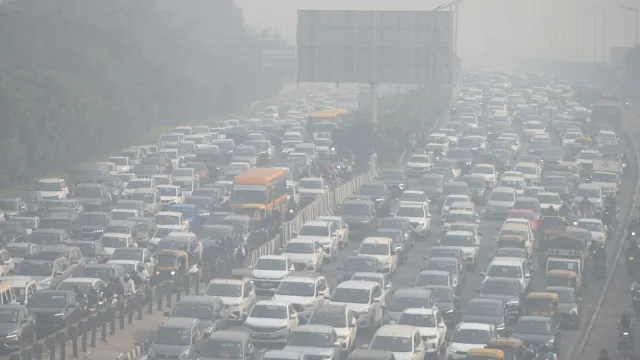
Delhi Air Pollution GRAP-3 Restrictions: Severe Crisis
Delhi Air Pollution GRAP-3 Restrictions have been implemented across the National Capital Region (NCR) after pollution levels in the national capital reached alarming levels. The Air Quality Index (AQI) crossed 400 in several locations, creating serious concerns among residents and authorities. The average AQI of Delhi was recorded at 389 at 8 AM on Friday, indicating very poor air quality.
Delhi Air Pollution Reaches Severe Levels
The situation of Delhi Air Pollution GRAP-3 Restrictions has become a major concern following extremely high AQI readings across different parts of the capital. Rohini recorded an AQI of 465, while Punjabi Bagh also registered 465. RK Puram recorded 443, Alipur 422, Feroz Shah Road 420 and Bhushya Gate 403.
These readings indicate the seriousness of the pollution situation. The worsening air quality has raised concerns about its impact on public health, particularly among children, elderly people and individuals with respiratory problems.
GRAP-3 Restrictions Implemented Across NCR
Following the increase in Delhi Air Pollution GRAP-3 Restrictions, the Commission for Air Quality Management (CAQM) announced Stage III measures under the Graded Response Action Plan. The restrictions came into effect across NCR from Friday.
According to the commission, pollution levels could increase further due to Diwali celebrations. The measures aim to control dust emissions, reduce vehicle pollution and prevent further deterioration of air quality.
Construction and Demolition Activities Banned
Under Delhi Air Pollution GRAP-3 Restrictions, several construction and demolition activities that generate dust have been prohibited. The restrictions include:
- Excavation and earthwork activities.
- Demolition of buildings and structures.
- Road construction and repair work.
- Stone cutting activities.
- Painting and polishing work.
- Transportation of construction materials without proper dust-control measures.
These restrictions are intended to reduce dust particles in the atmosphere and improve air quality across Delhi and neighbouring regions.
Essential Construction Projects Allowed
Although several construction activities have been suspended, essential infrastructure projects are exempted under specified conditions. These include metro rail projects, railway infrastructure, airports, hospitals, national security projects, highways, flyovers, power transmission projects, sewage treatment plants and water supply infrastructure.
The exemptions will help ensure that important public infrastructure and essential services continue without major disruption.
Vehicle Restrictions Under GRAP-3
Delhi Air Pollution GRAP-3 Restrictions also include measures to control vehicle emissions. BS-III petrol and BS-IV diesel four-wheelers will not be permitted to operate in the NCR under the applicable restrictions.
The decision aims to reduce harmful emissions from older vehicles. Authorities will monitor the implementation of these restrictions to ensure compliance with pollution-control regulations.
Work From Home Rules for Offices
Another important part of Delhi Air Pollution GRAP-3 Restrictions concerns government and private offices. Offices across the NCR may operate with 50 per cent of their employees physically present, while the remaining employees can work from home.
This arrangement is expected to reduce daily commuting, traffic congestion and vehicle emissions. Reduced traffic movement may contribute to improving air quality in the national capital.
Supreme Court Expresses Concern
The Supreme Court has expressed serious concern over the increasing air pollution in Delhi. On Friday, a bench headed by Chief Justice of India (CJI) Surya Kant took suo motu cognisance of the issue and conducted a hearing.
During the proceedings, the Chief Justice observed that increasing vehicular movement is contributing to pollution. He particularly mentioned that shopping and exchanging gifts during Diwali can increase traffic on roads.
The CJI emphasized that people should understand how certain festive activities indirectly contribute to air pollution through increased vehicle movement. He also suggested that society should reflect on its traditions and consider what its true cultural values should be.
Health Concerns Due to Rising Air Pollution
The implementation of Delhi Air Pollution GRAP-3 Restrictions highlights the seriousness of the environmental situation. Poor air quality can affect people of all age groups, particularly children, elderly citizens and individuals with existing respiratory conditions.
Residents should follow official pollution advisories, avoid unnecessary outdoor activities during periods of poor air quality and take appropriate precautions.
What Happened Next ?
Delhi Air Pollution GRAP-3 Restrictions are an important step towards controlling the worsening pollution situation across the national capital and NCR. With several locations recording extremely high AQI levels, authorities have introduced restrictions on construction activities, older vehicles and office attendance.
Public cooperation and effective implementation will be essential to improve air quality. Residents should remain updated with official announcements and follow the pollution-control guidelines.
Related External Sources
- Commission for Air Quality Management (CAQM)
- Central Pollution Control Board (CPCB)
- Business Standard
- The Economic Times
Stay connected with TodayDesh.com for more Pollution news updates and the latest developments from, across India.