

BJP Organises Anti-Sikh Riots Rally in Delhi Over 1984 Violence
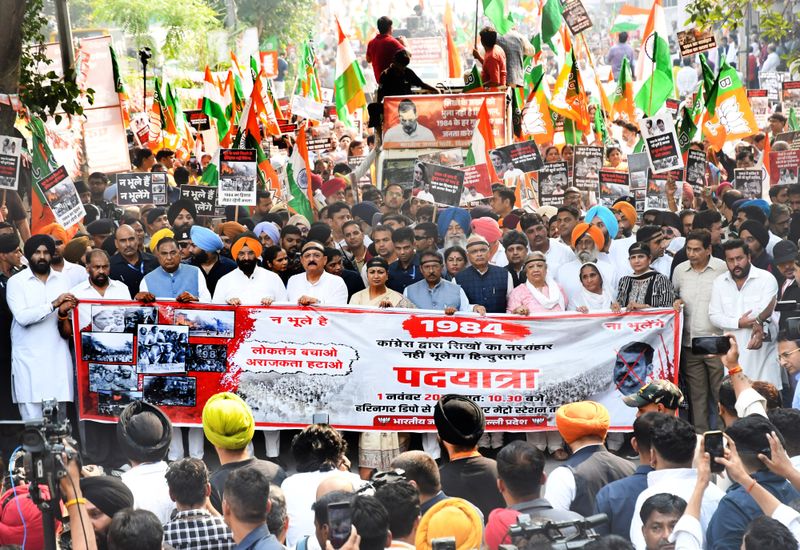
BJP Anti-Sikh Riots Rally in Delhi: The Bharatiya Janata Party (BJP) organised a rally in Delhi on November 1, protesting the 1984 anti-Sikh riots and demanding justice for the victims. The rally was organised while the opposition INDIA bloc was holding a political gathering at Ramlila Maidan against the MSA law. The BJP’s programme focused on remembering the victims of the 1984 violence and raising questions about the role of Congress leaders during that period.
The rally took place from Hari Nagar to Tilak Nagar, two areas with a significant Sikh population in the national capital. Several senior BJP leaders and government representatives participated in the programme. The party also demanded an apology from Congress leader and Leader of Opposition Rahul Gandhi over the 1984 anti-Sikh riots.
BJP Holds Rally from Hari Nagar to Tilak Nagar
The BJP Anti-Sikh Riots Rally in Delhi attracted attention because of its timing and political significance. The procession was organised on Sunday, November 1, beginning in Hari Nagar and proceeding towards Tilak Nagar.
These areas have a considerable Sikh population, and the rally aimed to highlight the suffering of families affected by the 1984 violence. BJP leaders raised demands for justice and accountability for the victims who lost family members and suffered during the riots.
The party also criticised the Congress leadership and demanded an apology from Rahul Gandhi. According to the BJP, the 1984 riots remain an important issue that requires continued public attention and justice for affected families.
Hardeep Singh Puri Calls 1984 Riots a Planned Conspiracy
Union Minister Hardeep Singh Puri strongly criticised the 1984 anti-Sikh riots during his remarks. He described the violence as a planned conspiracy and genocide. He also questioned the decision of the INDIA bloc, led by the Congress, to organise a political gathering in Delhi around the anniversary of the riots.
According to Puri, holding such a gathering was disrespectful to the Sikh community. He compared the situation to rubbing salt into the wounds of families who had suffered during the violence.
His remarks highlighted the BJP’s criticism of the opposition gathering. The minister emphasised that the victims and their families deserve justice and that the events of 1984 should not be forgotten.
Senior BJP Leaders Participate in Delhi Rally
Several prominent BJP leaders participated in the procession. Delhi Chief Minister Rekha Gupta, Delhi BJP president Harsh Malhotra and Delhi Minister Manjinder Singh Sirsa were among those present.
The participation of senior leaders gave the programme political importance. Their presence also demonstrated the party’s effort to highlight the 1984 anti-Sikh riots as a major historical and political issue.
The BJP reiterated its demand for justice for the victims and accountability regarding the violence. The party also used the occasion to criticise the Congress leadership over its historical association with the period.
INDIA Bloc Holds Gathering at Ramlila Maidan
At the same time, opposition parties belonging to the INDIA bloc organised a gathering at Ramlila Maidan in Delhi against the MSA law, as mentioned in the report.
The simultaneous political programmes created a situation in which the ruling BJP and opposition parties highlighted different issues. While the opposition focused on its protest against the legislation, the BJP concentrated on the 1984 anti-Sikh riots and the demand for justice for victims.
The BJP organised its procession as a political response to the opposition’s gathering. The events attracted attention because both sides were holding programmes in the national capital on the same day.
BJP Organises Another Rally in Haryana
Apart from the Delhi programme, another procession was organised in Haryana under the leadership of BJP national president Nitin Naveen. The rally was conducted under the slogan “Save Democracy, Remove Anarchy”.
The Haryana programme was also organised as a response to the opposition’s political gathering. Through these activities, the BJP sought to highlight its political position on issues raised by the opposition.
The rallies in Delhi and Haryana reflected the political confrontation between the ruling party and opposition leaders. Both sides used public gatherings to communicate their positions and mobilise support.
1984 Anti-Sikh Riots: A Significant Chapter in Indian History
The 1984 anti-Sikh riots remain one of the most painful chapters in modern Indian history. Thousands of Sikh people were killed in violence that followed the assassination of then Prime Minister Indira Gandhi on October 31, 1984. Many families lost their loved ones, homes and livelihoods.
Over the years, investigations, court proceedings and public discussions have continued regarding accountability and justice for the victims. The demand for justice remains significant for many affected families and members of the Sikh community.
The anniversary of the violence provides an opportunity to remember those who lost their lives and recognise the suffering experienced by survivors. Ensuring justice, protecting communities and preventing such violence in the future remain important responsibilities.
Why BJP Anti-Sikh Riots Rally in Delhi Became Politically Significant
The BJP Anti-Sikh Riots Rally in Delhi became a major political talking point because it was organised on the anniversary of the 1984 violence. The procession highlighted the demand for justice for victims and renewed public discussion about the events that affected thousands of Sikh families. Through the BJP Anti-Sikh Riots Rally in Delhi, party leaders sought to remind people of the historical tragedy and raise questions about accountability.
The BJP Anti-Sikh Riots Rally in Delhi also drew attention because of the participation of senior political leaders. Their statements focused on the suffering of victims and the need to remember the events of 1984. The rally provided a platform for the party to express its position on the issue.
Public Attention on the 1984 Anti-Sikh Riots
The BJP Anti-Sikh Riots Rally in Delhi once again brought the 1984 anti-Sikh riots into public discussion. For survivors and affected families, the demand for justice remains an important concern. Public remembrance, fair investigations and accountability are essential to ensuring that such violence is never repeated.
Key Details of the BJP Rally in Delhi
| Details | Information |
|---|---|
| Event | BJP Anti-Sikh Riots Rally |
| Location | New Delhi, India |
| Route | Hari Nagar to Tilak Nagar |
| Date | November 1 |
| Main Issue | 1984 Anti-Sikh Riots |
| Union Minister | Hardeep Singh Puri |
| Delhi Chief Minister | Rekha Gupta |
| Other Participants | Harsh Malhotra and Manjinder Singh Sirsa |
| BJP’s Demand | Justice for victims and an apology from Rahul Gandhi |
| Other Rally | Save Democracy, Remove Anarchy – Haryana |
What Happened Next ?
The BJP Anti-Sikh Riots Rally in Delhi brought the issue of the 1984 violence back into political discussion. The party demanded justice for victims and criticised the Congress leadership, while senior BJP leaders participated in the procession from Hari Nagar to Tilak Nagar.
The simultaneous INDIA bloc gathering at Ramlila Maidan and the BJP rally highlighted the continuing political differences between the ruling party and opposition. Beyond political disagreements, remembering the victims, supporting affected families and ensuring justice remain important priorities.
Related News and Sources
- BJP Protest March in Delhi – The Week
- BJP March Against Anti-Sikh Riots – Hindustan Times
- Sikh Community Joins Delhi March – The Tribune
- BJP Rally Report – ThePrint
Stay connected with TodayDesh.com for more Political news updates and the latest developments from, across India.